Coleção de André EtruscoA series by André Etrusco

E se eles conversassem?What If They Talked?

Duas figuras que a história nunca pôs frente a frente. Uma sala fora do tempo. Todo fato é real. Só o encontro é imaginado.Two figures history never brought face to face. A room outside time. Every fact is real. Only the meeting is imagined.

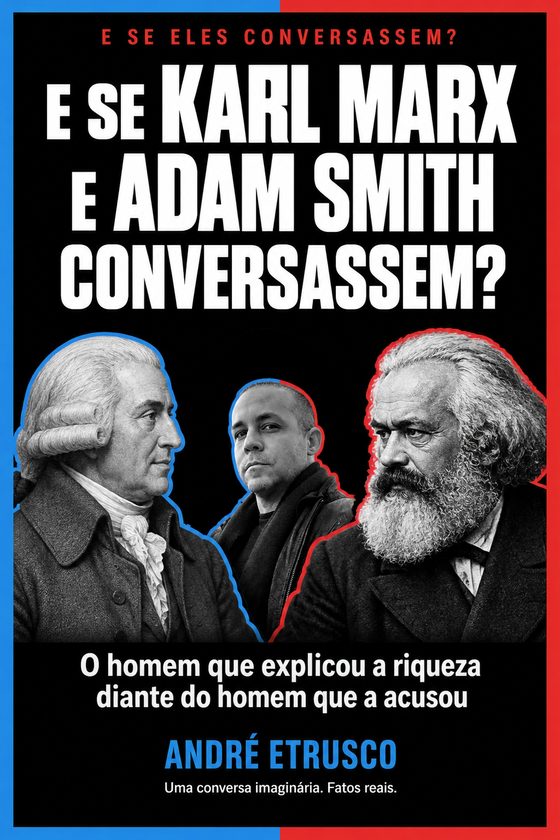
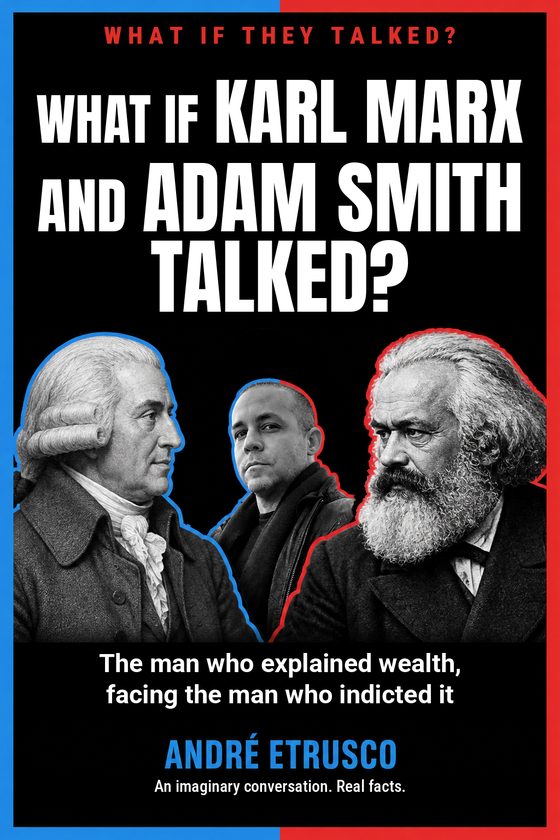
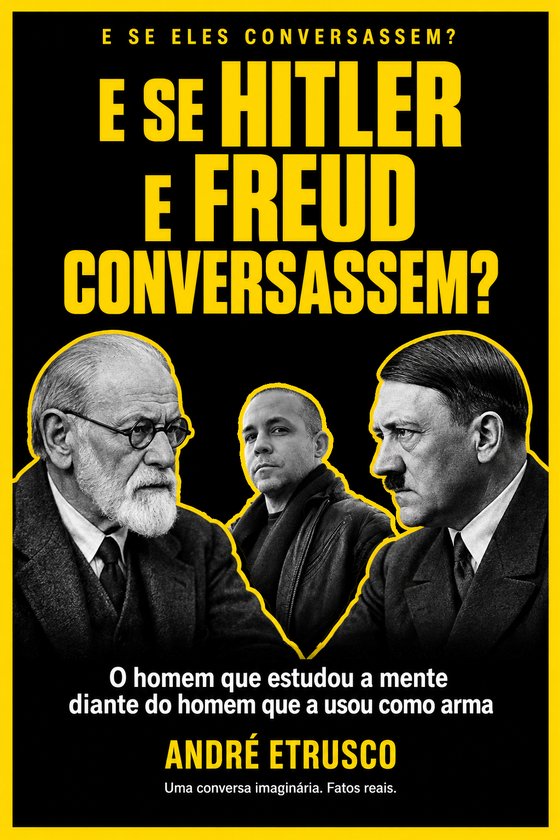
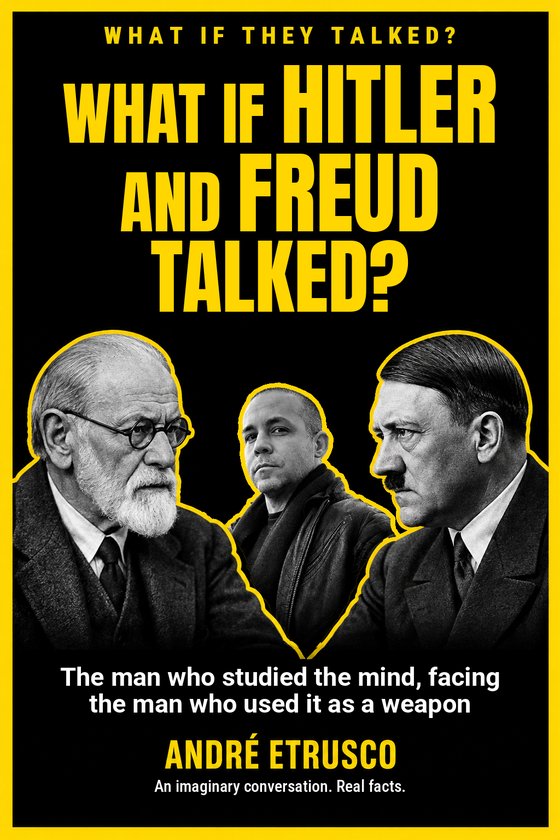
Capa: E se Hitler e Freud conversassem?Cover: What If Hitler and Freud Talked? Capa: E se Karl Marx e Adam Smith conversassem?Cover: What If Karl Marx and Adam Smith Talked?
A coleçãoThe series

Encontros que nunca aconteceramMeetings that never happened

Cada volume sai em português e em inglês. Cada um sabe apenas o que viveu. O autor conduz a conversa, interrompe, confronta e, ao fim de cada encontro, conta o que viu. Notas para o leitor separam o que é documentado do que é imaginado. É um jeito de conhecer de perto as figuras que mudaram a história e de pensar melhor a partir do choque entre elas. A coleção é escrita pelo autor em parceria com inteligência artificial, a partir de ideias e estudos que ele desenvolve há anos.Every volume is published in Portuguese and English. Each of them knows only what they lived. The author leads the conversation, interrupts, confronts, and after each meeting writes down what he saw. Reader's notes separate what is documented from what is imagined. It is a way to meet the figures who changed history up close, and to think better from the clash between them. The series is written by the author in partnership with artificial intelligence, drawing on ideas and studies he has developed for years.

Volume 1Volume 1

E se Hitler e Freud conversassem?What If Hitler and Freud Talked?

O homem que estudou a mente diante do homem que a usou como armaThe man who studied the mind, facing the man who used it as a weapon

Sete sessões. Um divã. O que a mente explica, e o que ela nunca vai explicar?Seven sessions. One couch. What can the mind explain, and what will it never explain?

Viena, 1910. Num consultório da Berggasse, um médico judeu escreve as ideias que vão mudar o modo como entendemos a mente. A três quilômetros dali, num albergue para homens sem dinheiro, um rapaz reprovado na escola de arte pinta cartões-postais para sobreviver. Vinte e oito anos depois, o rapaz voltou a Viena à frente de um exército, e o médico teve de fugir.Vienna, 1910. In a consulting room on Berggasse, a Jewish doctor writes the ideas that will change how we understand the mind. Three kilometers away, in a hostel for penniless men, a young man rejected by art school paints postcards to survive. Twenty-eight years later he returned to Vienna at the head of an army, and the doctor had to flee.
Volume 2

E se Karl Marx e Adam Smith conversassem?What If Karl Marx and Adam Smith Talked?

O homem que explicou a riqueza diante do homem que a acusouThe man who explained wealth, facing the man who indicted it

Sete noites. Um jantar. Quem tinha razão, e a que preço?Seven nights. One dinner. Who was right, and at what cost?

Um viveu de uma pensão vitalícia paga por um duque. O outro viveu do dinheiro que o amigo tirava de uma fábrica de algodão. Nenhum dos dois jamais administrou um negócio, e os dois escreveram os livros que até hoje dividem o mundo. Smith não sabe o que foram as fábricas do século XIX. Marx não sabe o que foi feito em seu nome no século XX.One lived on a lifetime pension paid by a duke. The other lived on money his friend drew from a cotton mill. Neither ever ran a business, and both wrote the books that still divide the world. Smith does not know what the factories of the nineteenth century became. Marx does not know what was done in his name in the twentieth.

Os próximos à mesaNext at the table

  1. 03Zumbi dos Palmares e Princesa IsabelZumbi dos Palmares and Princess Isabel
  2. 04Napoleon Hill e Neville GoddardNapoleon Hill and Neville Goddard
  3. 05Evita e Che GuevaraEvita and Che Guevara
  4. 06Buda e Jesus CristoBuddha and Jesus Christ
  5. 07Gandhi e MandelaGandhi and Mandela
  6. 08Coco Chanel e Josephine BakerCoco Chanel and Josephine Baker
  7. 09Nietzsche e Madre TeresaNietzsche and Mother Teresa
  8. 10Margaret Thatcher e Simone de BeauvoirMargaret Thatcher and Simone de Beauvoir
  9. 11Marie Curie e OppenheimerMarie Curie and Oppenheimer
  10. 12Maquiavel e NapoleãoMachiavelli and Napoleon
  11. 13Charles Darwin e Santo AgostinhoCharles Darwin and Saint Augustine
Ensaios · Português e inglêsEssays · Portuguese and English

Poder, mente e o desenho das sociedadesPower, mind and the design of societies

Dois livros que se completam e se leem de forma independente. Os dois estão disponíveis em português e em inglês.Two books that complement each other and stand on their own. Both are available in Portuguese and English.

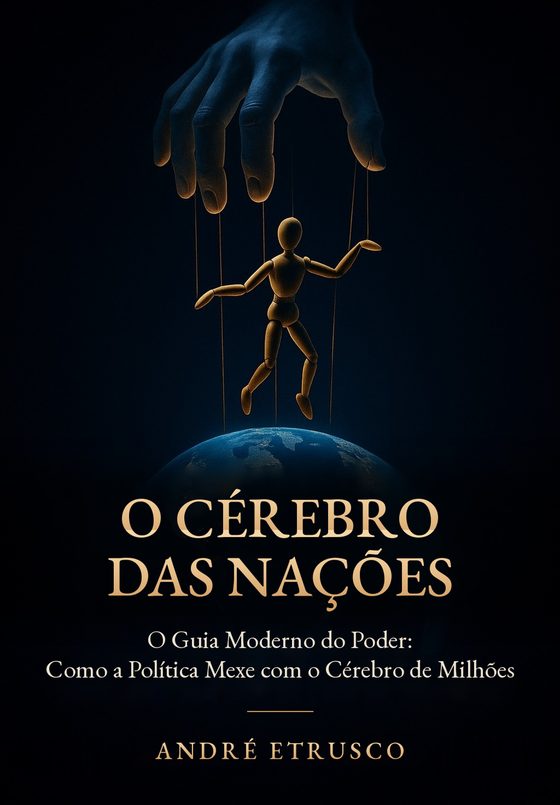
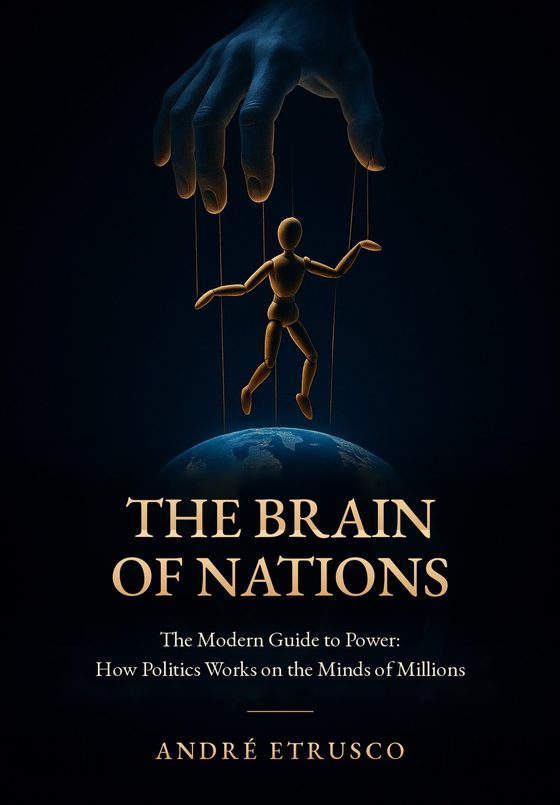
Capa: O Cérebro das Nações Cover: The Brain of Nations

O Cérebro das NaçõesThe Brain of Nations

O Guia Moderno do Poder: como a política mexe com o cérebro de milhõesThe Modern Guide to Power: How Politics Works on the Minds of Millions

Por que certas sociedades se organizam em torno do procedimento e outras em torno da relação pessoal? O livro propõe a Teoria da Ecologia Cognitiva Nacional, um modelo formulado como hipóteses testáveis, segundo o qual a educação acumulada de uma sociedade e a segurança material que ela oferece moldam seus estilos de confiança, de coesão e de decisão política. Descreve as gramáticas morais da esquerda e da direita sem caricatura e oferece critérios para distinguir persuasão de manipulação.Why do some societies organize around procedure and others around personal bonds? The book proposes the Theory of National Cognitive Ecology, a model framed as testable hypotheses, in which a society's accumulated education and the material security it offers shape its styles of trust, cohesion and political decision-making. It describes the moral grammars of left and right without caricature and offers criteria for telling persuasion from manipulation.

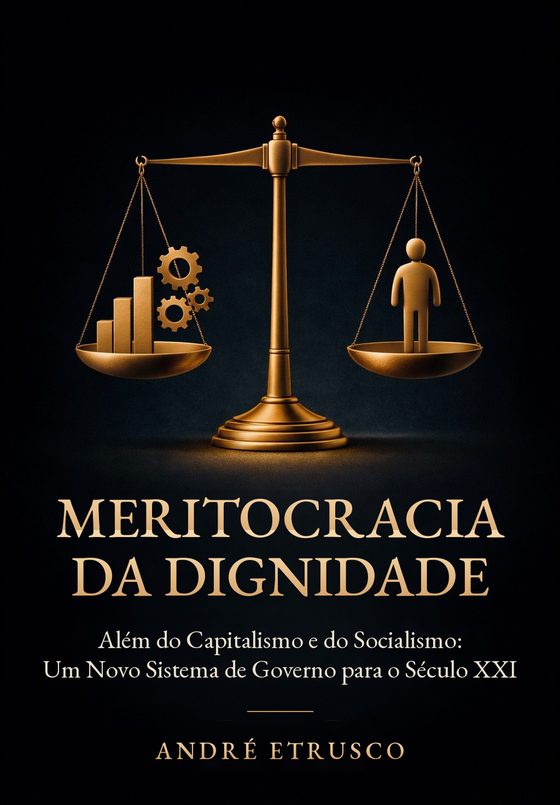
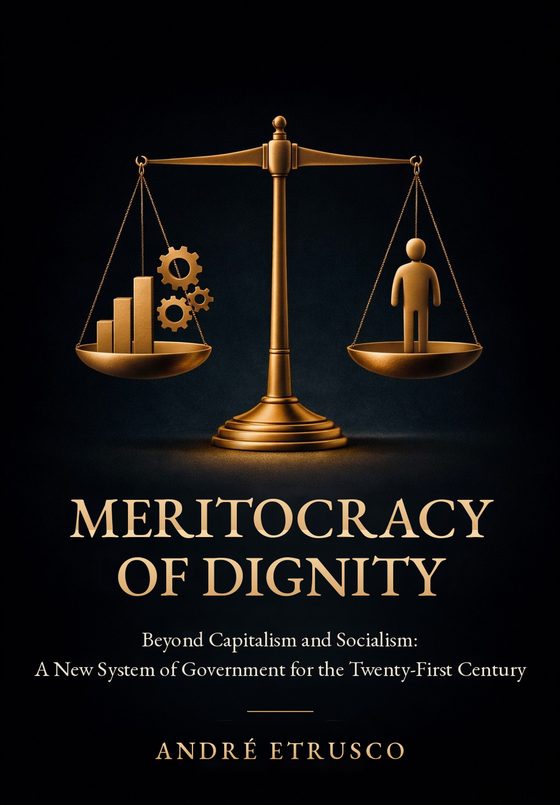
Capa: Meritocracia da Dignidade Cover: Meritocracy of Dignity

Meritocracia da DignidadeMeritocracy of Dignity

Além do Capitalismo e do Socialismo: um novo sistema de governo para o século XXIBeyond Capitalism and Socialism: A New System of Government for the Twenty-First Century

Combinando economia comportamental, teoria dos jogos, sistemas complexos e uma simulação comparativa de regimes políticos com código aberto, o livro mostra que os sistemas parecem fracassar menos por ideologia e mais por incentivos mal calibrados e instituições incapazes de conter captura e ressentimento. Propõe um modelo baseado em dignidade material incondicional e mercados genuinamente competitivos, com as condições em que funcionaria e os testes que poderiam refutá-lo.Combining behavioral economics, game theory, complex systems and an open-source comparative simulation of political regimes, the book shows that systems seem to fail less because of ideology and more because of poorly calibrated incentives and institutions unable to contain capture and resentment. It proposes a model built on unconditional material dignity and genuinely competitive markets, with the conditions under which it would work and the tests that could refute it.

Material suplementar · Meritocracia da DignidadeSupplementary material · Meritocracy of Dignity

Confira a simulação você mesmoCheck the simulation yourself

O apêndice do livro descreve uma simulação comparativa de regimes políticos. Aqui estão o código, os parâmetros, os resultados e as predições registradas antes dos testes, para que estudantes, professores e pesquisadores possam reproduzir, contestar ou ampliar o trabalho.The book's appendix describes a comparative simulation of political regimes. Here are the code, the parameters, the results and the predictions registered before testing, so students, teachers and researchers can reproduce, challenge or extend the work.

Código sob licença MIT. Relatórios sob licença CC BY 4.0. Uso livre, inclusive em aula, com citação.Code under the MIT license. Reports under CC BY 4.0. Free to use, including in class, with attribution.

Como citarHow to cite

Etrusco, A. (2026). Material suplementar de Meritocracia da Dignidade: simulação comparativa de regimes políticos (v1.0) [Software e dados]. Zenodo. DOI a definir.

  • simulacao_regimes.pyO modelo: agentes, regimes e regras de transiçãoThe model: agents, regimes and transition rules
  • analise.py · grade.pyAnálise de sensibilidade e varredura de parâmetrosSensitivity analysis and parameter sweep
  • final.py · relatorio.pyRodada final e geração do relatórioFinal run and report generation
  • parametros.csvTodos os parâmetros usados, em planilhaEvery parameter used, as a spreadsheet
  • *.json · *.pngResultados brutos e gráficosRaw results and charts
  • predicoes_registradas.mdPredições registradas antes dos testes (PT e EN)Predictions registered before testing (PT and EN)
  • RelatóriosReportsRelatório técnico completo em português e inglêsFull technical report in Portuguese and English
  • LEIA-ME_README.mdComo rodar, em duas línguasHow to run it, in both languages
O autorThe author

André Etrusco

“Muitos livros repetem as mesmas histórias, do mesmo jeito, geração após geração. Algumas merecem ser olhadas de outro ângulo. É desse olhar que nascem histórias novas e teses que valem a pena.”“Many books retell the same stories, the same way, generation after generation. Some deserve to be seen from another angle. That is where new stories, and theses worth having, are born.”

André Etrusco é escritor e empreendedor brasileiro. É autor de O Cérebro das Nações e Meritocracia da Dignidade, livros sobre poder, política e organização da sociedade, e de Descobrindo Deus, sobre a consciência como fundamento da realidade. Trabalha com tecnologia e inteligência artificial.André Etrusco is a Brazilian writer and entrepreneur. He is the author of The Brain of Nations and Meritocracy of Dignity, books on power, politics and how societies are organized, and of Descobrindo Deus (Discovering God), on consciousness as the ground of reality. He works in technology and artificial intelligence.

Na coleção E se eles conversassem?, reúne em cada volume duas figuras que a história nunca colocou frente a frente. Ele entra na sala como anfitrião: conduz, interrompe, confronta e, no fim de cada encontro, escreve o que viu.In the series What If They Talked?, each volume brings together two figures history never placed face to face. He enters the room as host: he leads, interrupts, confronts, and at the end of each meeting writes down what he saw.

Siga o autorFollow the author